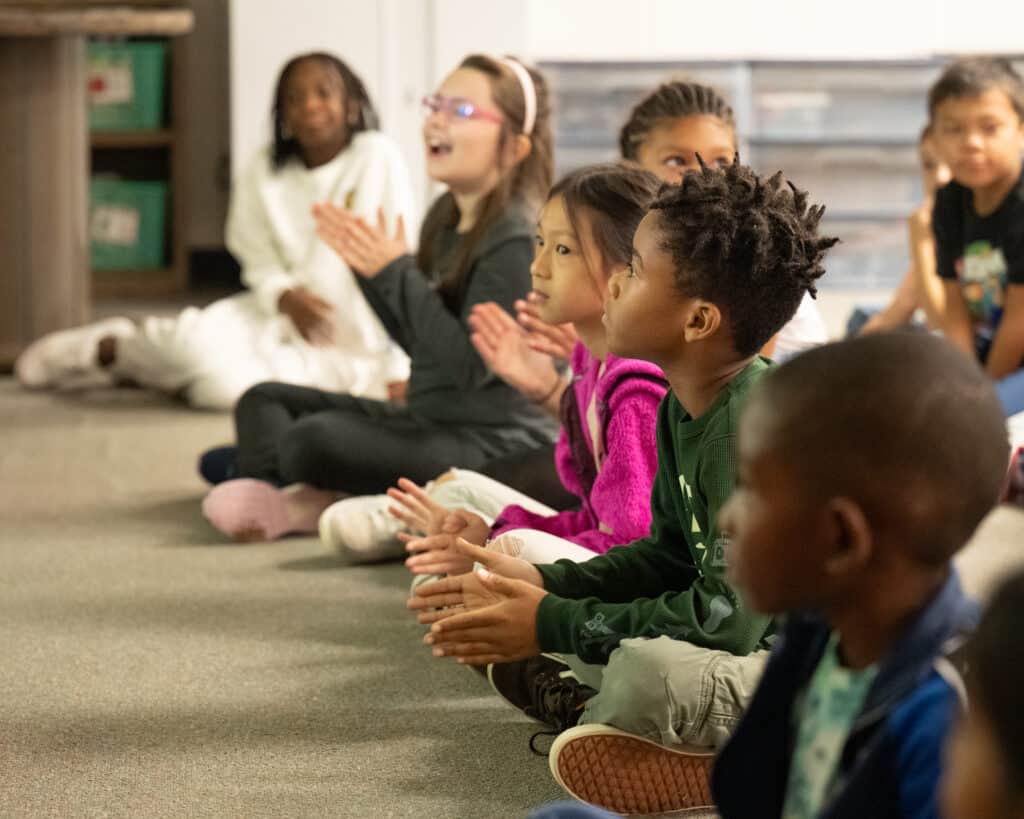
Seven intentionally-designed programs that together create the LEAD experience. Each one is grounded in research, anchored to our mission, and built around how children actually learn best.
At LEAD School, learning goes far beyond worksheets and isolated lessons. Each day, students engage in Project-Based Learning (PBL), diving into extended, real-world projects. They investigate meaningful questions, solve authentic community problems, collaborate with peers, and create high-quality products or presentations for real audiences.
Each unit is anchored by a compelling driving question from a real community partner and culminates in a public presentation or product. This approach challenges students to think critically, innovate, design, build, and solve — applying their knowledge in powerful ways rather than simply memorizing facts.
At LEAD, students don't just learn about the world — they learn how to shape it.
Modern students are digital natives who learn best through active, relevant, and collaborative experiences rather than passive memorization. A growing body of rigorous research confirms PBL's effectiveness:
In today's rapidly changing world, students need more than content knowledge — they need the ability to adapt, create, and lead in unfamiliar situations. PBL develops exactly those skills.
Project-Based Learning is where LEAD's mission comes to life. It is the perfect vehicle for living our four pillars every day:
LEAD Class is our signature daily program and the heartbeat of our school's mission. It is intentionally designed to help students develop the four pillars that define a LEAD education: Leadership, Entrepreneurship, Activism, and Duty to Community.
Rather than treating these as abstract ideas, the LEAD Class gives students consistent, real-world opportunities to practice the skills and mindsets that future leaders need. Through a carefully sequenced, multi-year curriculum, students move from foundational skills in the early grades to advanced leadership and real-world application by eighth grade.
Students study leaders from diverse backgrounds through fiction and non-fiction. Over time, they move from identifying leadership traits to applying them — ultimately shadowing and learning directly from leaders in their community.
Students develop the communication, etiquette, and presence that open doors. From basic social skills in early grades to professional communication, networking, and digital etiquette in middle school.
Students learn the full cycle of entrepreneurship — idea generation, market research, design thinking, and pitching. What begins as creativity in the early years evolves into real businesses and community-based ventures.
Students build financial literacy and consumer math — from identifying coins and the difference between needs and wants in kindergarten to creating business plans, budgets, and basic investing in 8th grade.
By 8th grade, students are leading conversations and events, launching and managing businesses, making strategic financial decisions, and applying their learning in authentic, community-based contexts. The LEAD Class is not an "extra." It is the thread that connects everything we do — the class that turns LEAD School students into fearless creators and leaders.
At the heart of The LEAD School is our House System — the cornerstone of our school culture. It is a vibrant, student-driven community structure designed to build belonging, foster healthy collaborative competition, and create daily opportunities for students to live out the values of Leadership, Entrepreneurship, Activism, and Duty to Community.
Every student and staff member is sorted into one of four multi-age Houses that they will remain in their entire time at LEAD. These houses function as families within the school, where older students mentor younger peers, relationships deepen, and every individual is known, valued, and supported.
Throughout the year, Houses compete in academics, creativity, service projects, sports, and school spirit challenges. Points are earned through positive behavior, academic effort, collaboration, and community impact — turning everyday actions into meaningful contributions.
Which House will you rise with?
Unlike traditional house models, LEAD houses are student-built and student-led. Each house develops its own identity by creating a crest, chant, hand gesture, colors, motto, and traditions — fostering ownership, pride, and a strong sense of collective purpose.
Research on belonging consistently shows that students who feel deeply connected to a sub-community within their school have stronger attendance, higher academic engagement, and more positive social-emotional outcomes. The House system creates that belonging on day one and reinforces it daily.
The House System directly supports the four pillars of LEAD:
Typical Colorado students are given 30 minutes of physical play per day. At LEAD, we believe students should have unstructured play outdoors more often. So we give our students a minimum of 1 hour outdoor play per day — and often even more.
Students have free play at the start of the school day and multiple times during the learning day. In addition, every class has a dedicated outdoor classroom space whose use is encouraged year-round.
Imagine students gathering sticks and rocks to engineer their own version of the Titanic — debating hull design and balance while negotiating roles in their crew. Or picture a group brainstorming and building a tree swing, carefully calculating rope strength, branch height, and launch angles before the first thrilling test ride. These moments aren't just "play" — they are powerful, research-backed opportunities for growth.
Play that is as risky as it needs to be.
Our Adventure Play philosophy provides students with regular, outdoor, minimally structured time to explore, create, and test their limits in nature.
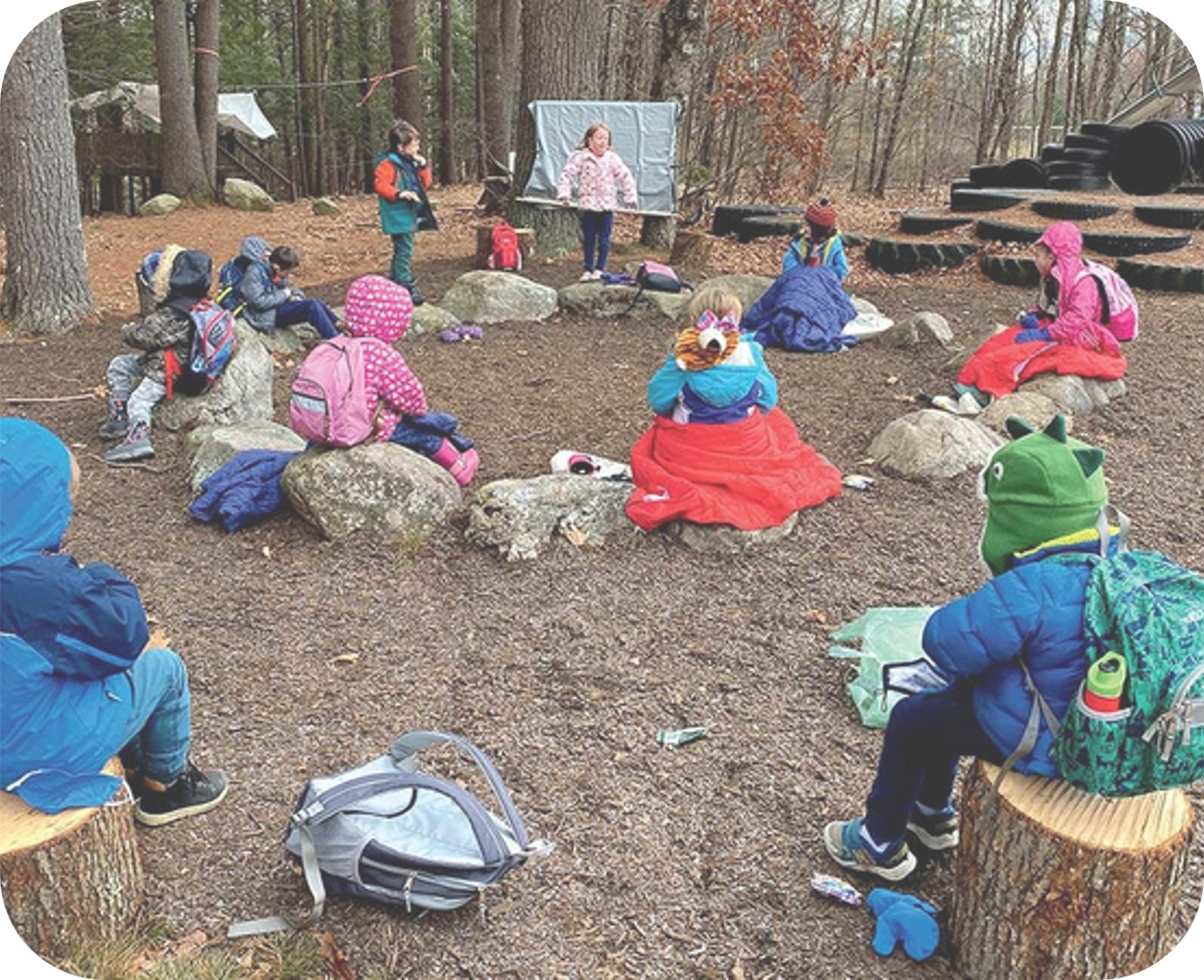
Child development research consistently shows that risky, outdoor, minimally structured play delivers benefits that structured classroom or indoor activities simply cannot match:
Our mission requires more than academic knowledge. It requires confidence, resilience, creativity, and the ability to make decisions in real time. Adventure Play is where those qualities are built.
In outdoor, minimally structured environments, students are free to explore, build, and take on challenges that are as risky as they need to be. Whether they are engineering a structure from natural materials, testing the limits of a design, or navigating social dynamics with peers, students are constantly making decisions, solving problems, and learning from the outcomes.
Students don't become capable by being protected from challenge — they become capable by engaging with it.
At The LEAD School, we believe discipline should be about learning and growth — not just punishment. By using the approach of restorative justice, we ensure that discipline is rooted in accountability, growth, and restoring a strong, respectful school community.
Through our approach, students learn to take responsibility for their actions, understand the impact of their choices, and actively repair harm. Instead of simply removing students from learning, we guide them through structured conversations and reflection so they can learn from mistakes and re-enter the community stronger.
Research shows that restorative practices can improve school climate, support positive behavior, and reduce suspensions and other disciplinary referrals, while also helping students develop empathy, problem-solving, and conflict-resolution skills. In elementary settings, these practices are especially helpful because young children learn best through guided conversations, consistent routines, and caring adult support.
In Pittsburgh Public Schools that used restorative approaches, suspension rates dropped 36% and teachers' perceptions of school climate improved — with the strongest benefits observed in elementary grades.
Restorative practices are not separate from our mission — they are how we live it.
Together, we don't just manage behavior — we grow better humans and future leaders.
Morning meeting sets the social, emotional, and instructional tone for the entire day through four distinct sections: greeting, sharing, activity, and morning message/calendar.
Students use active listening, paraphrasing, and respectful turn-taking skills in a low-stakes environment to build their communication powers. They learn to share ideas, feelings, and perspectives in a structured, supportive space. Daily reflection questions and SEL activities help students examine their thinking, behavior, and emotions to increase their self-awareness and support their growth.
Teachers and staff develop stronger relationships with students and the classroom community, which reduces behavioral disturbances. They also model vulnerability — supporting their own personal reflection and growth journeys.
Research shows that this simple practice yields meaningful benefits in elementary settings by improving behavior, relationships, and academic readiness:
Morning Meeting is where LEAD's mission comes to life at the start of every day. As students gather to connect, reflect, and communicate, they are building the mindset and skills needed to lead boldly and create opportunities.
By intentionally creating space for connection and reflection, Morning Meeting may seem fun, but is intentionally designed to help students build the confidence, relationships, and self-awareness necessary to succeed not just academically, but as leaders in an ever-changing world.
In elementary school, students will be with the same teacher over a two-year time span (K–1, 2–3, 4–5). This model presents advantages both to students' academic and social learning skills.
Older students develop leadership skills as they mentor and model for younger students. Advanced students are challenged by their peers, not limited by grade level, and gain valuable reinforcement by peer teaching to others. The natural collaboration across age and ability levels drives each student toward personal improvement.
By constantly seeing other students at different stages of learning, the comparison shifts from "What grade am I in?" to "What am I working on?" — which in turn reduces the shame around not knowing something yet and increases student teachability.
Teachers normally spend a great deal of time each year understanding their students' needs. By keeping the same students for two years, this time is greatly reduced and can be allocated to increased learning. Teachers develop deeper understanding of each student's strengths and growth areas, and gain a built-in collaboration partner for improved planning.
Research on multi-age classrooms at the elementary level consistently shows they are a strong, viable alternative to traditional single-grade setups:
Multi-age classrooms create the conditions where LEAD's pillars and values can come alive every day:
Express your interest and help us bring The LEAD School to your neighborhood.